Mason Raye on making music with a voice that doesn't exist - and why that might be the most honest thing he's ever done.
There are albums you listen to. And there are albums where you feel like you've accidentally walked into something private. *Back to Me*, the debut album - the record that brought him to Signal State Records's attention - is clearly the latter. Eleven tracks, one story, one DeLorean - and an AI voice named Synara Vale who sounds like she belongs to a different era.
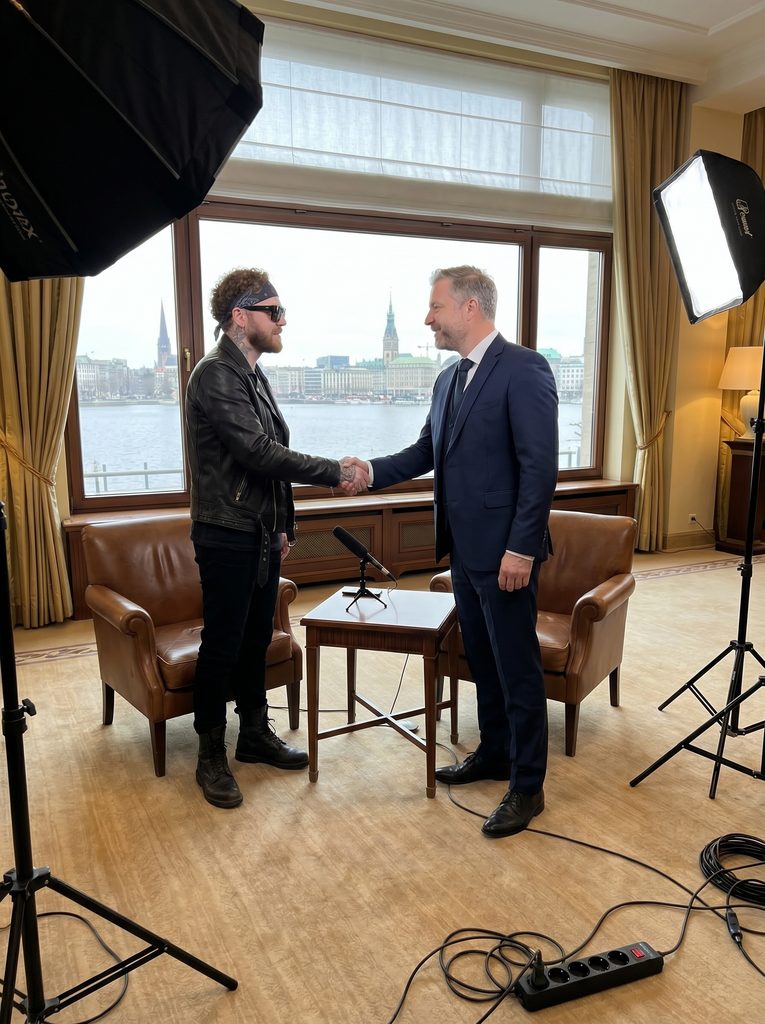
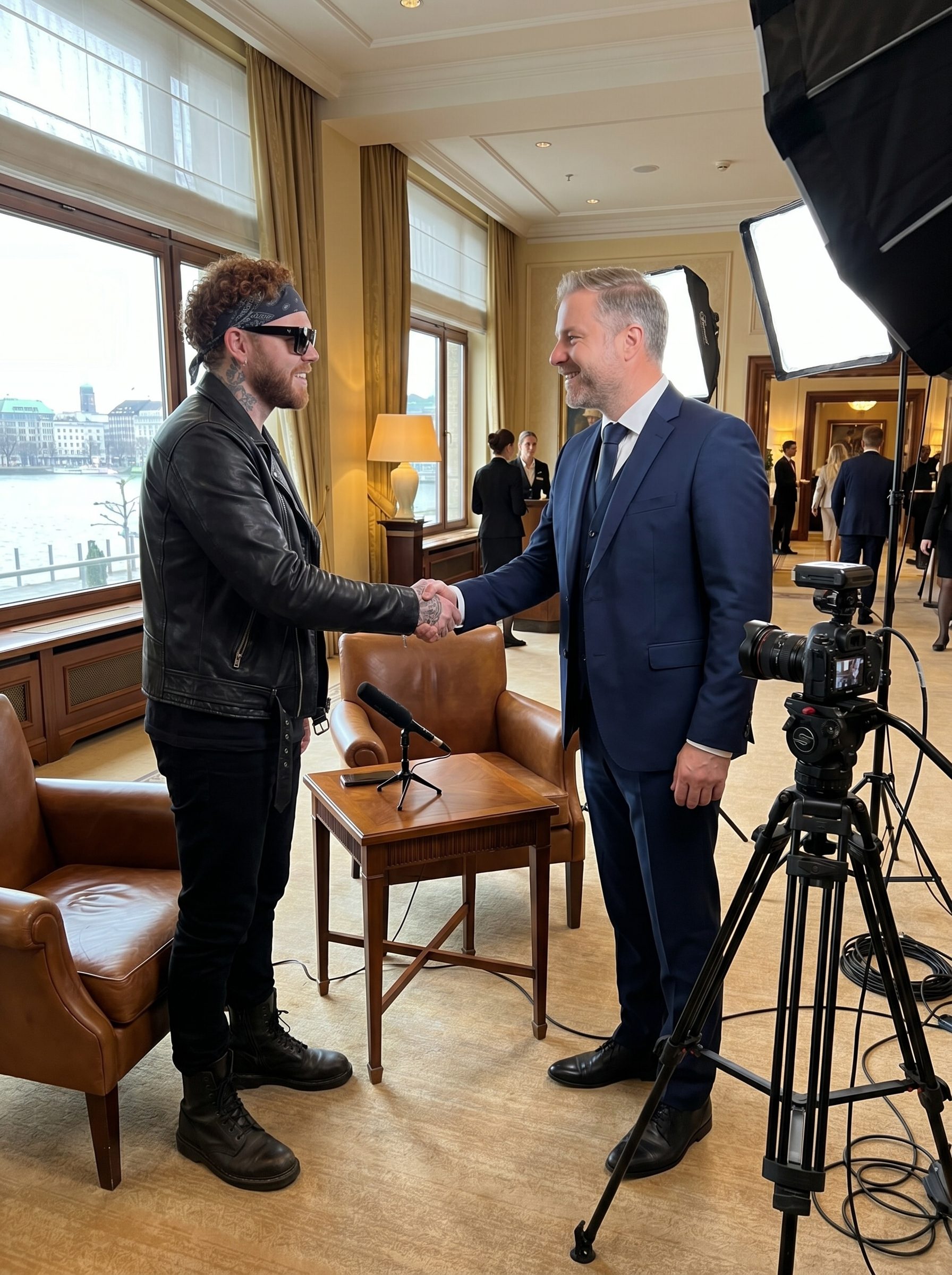
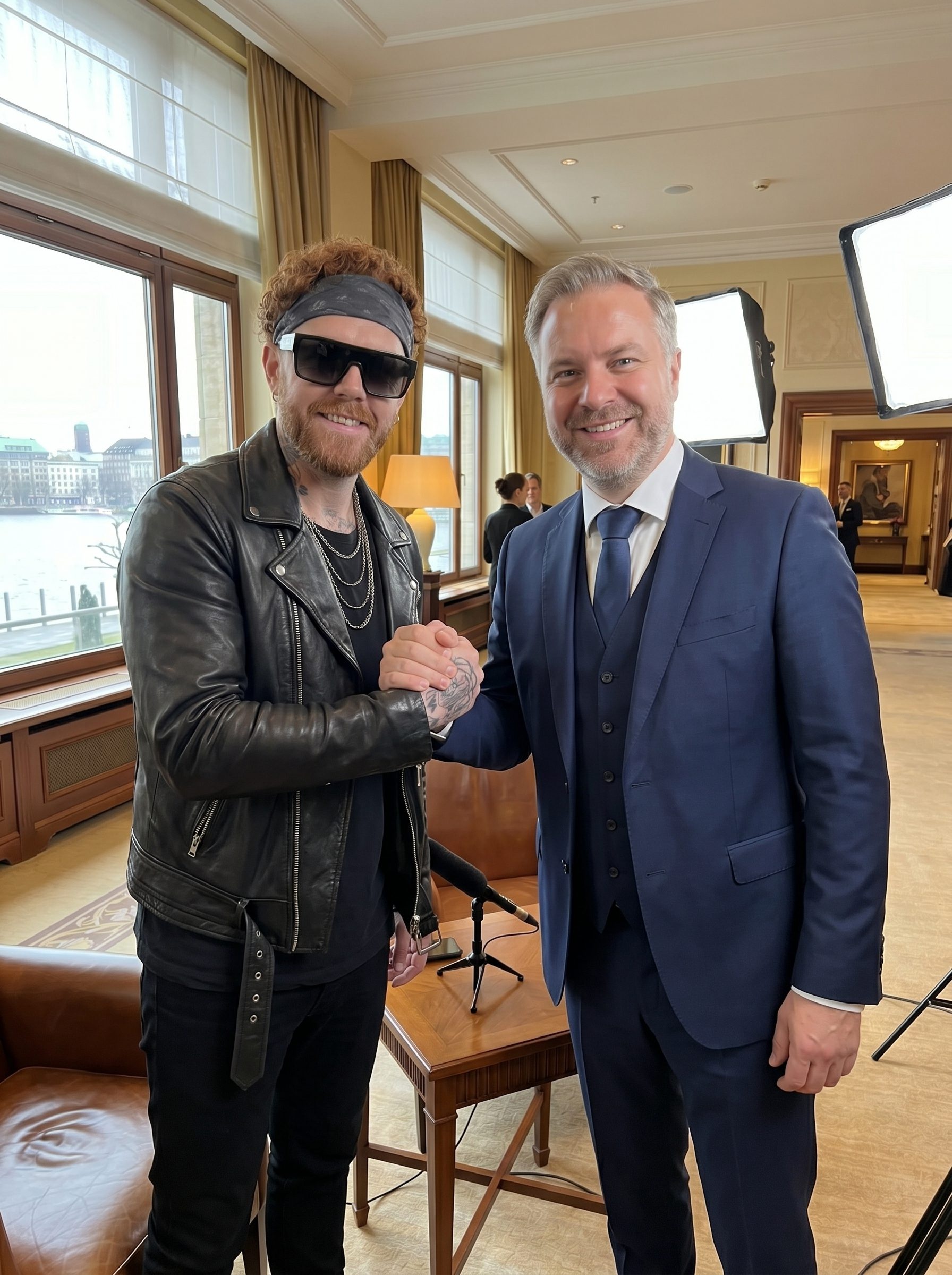
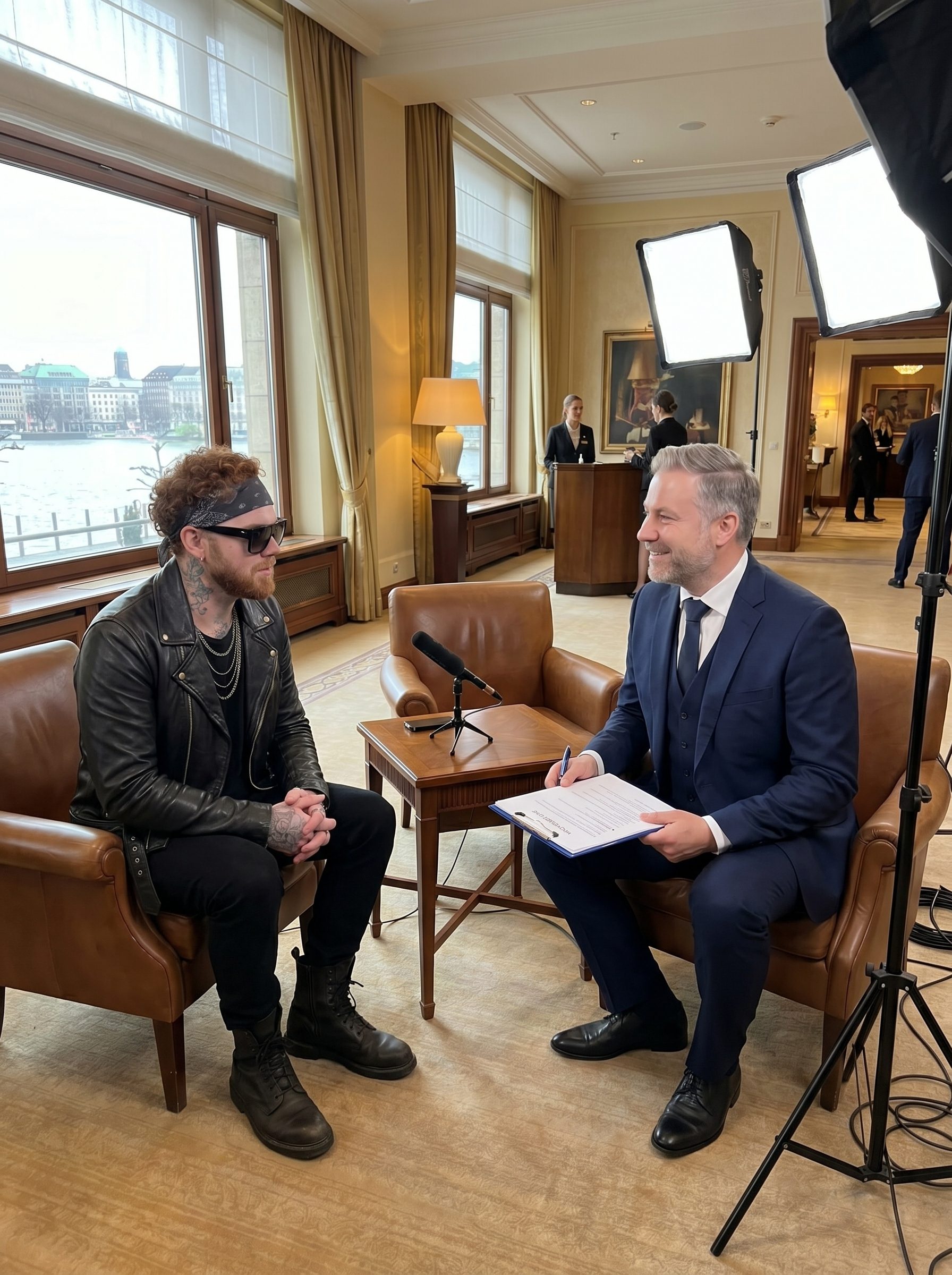
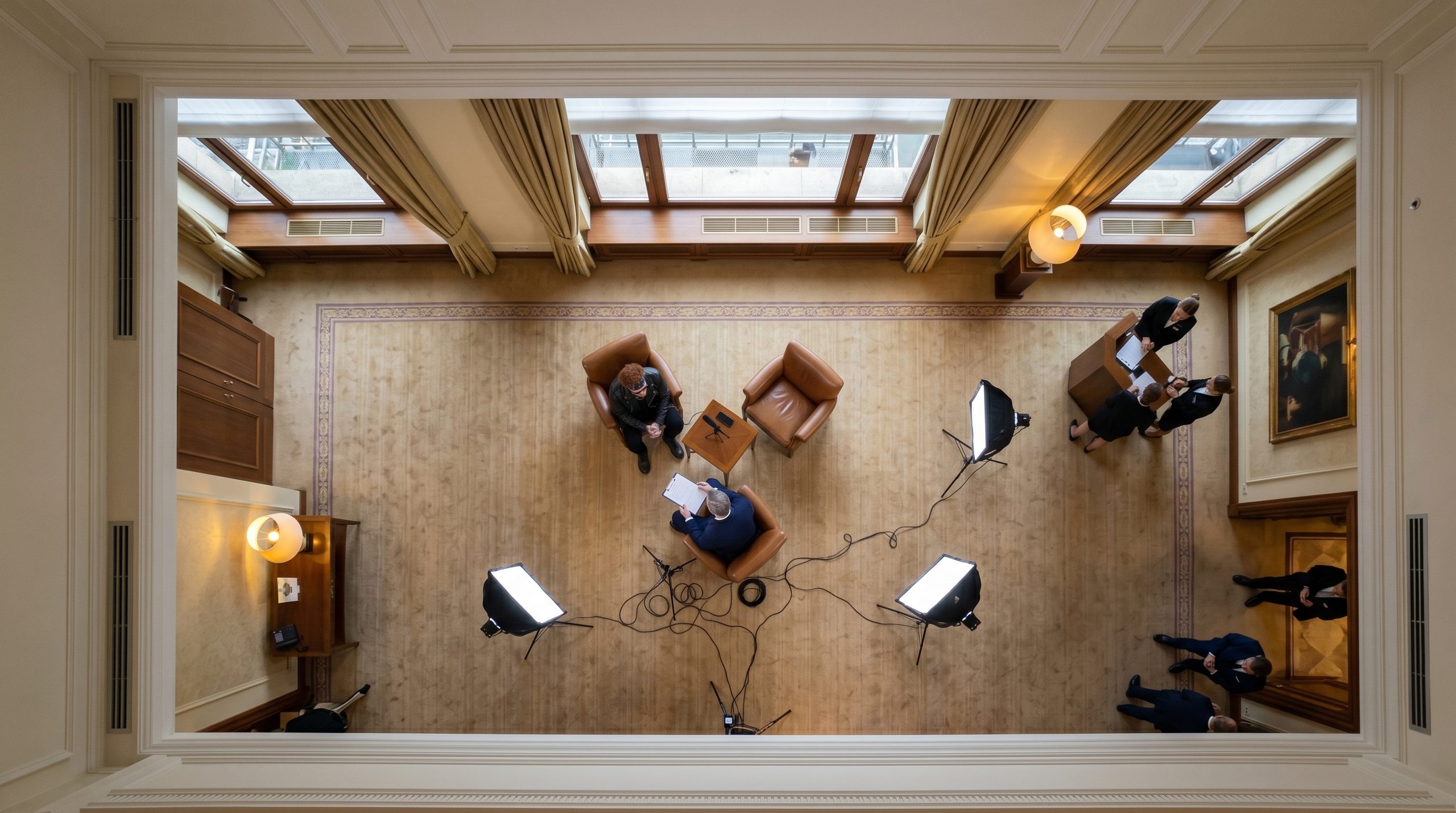
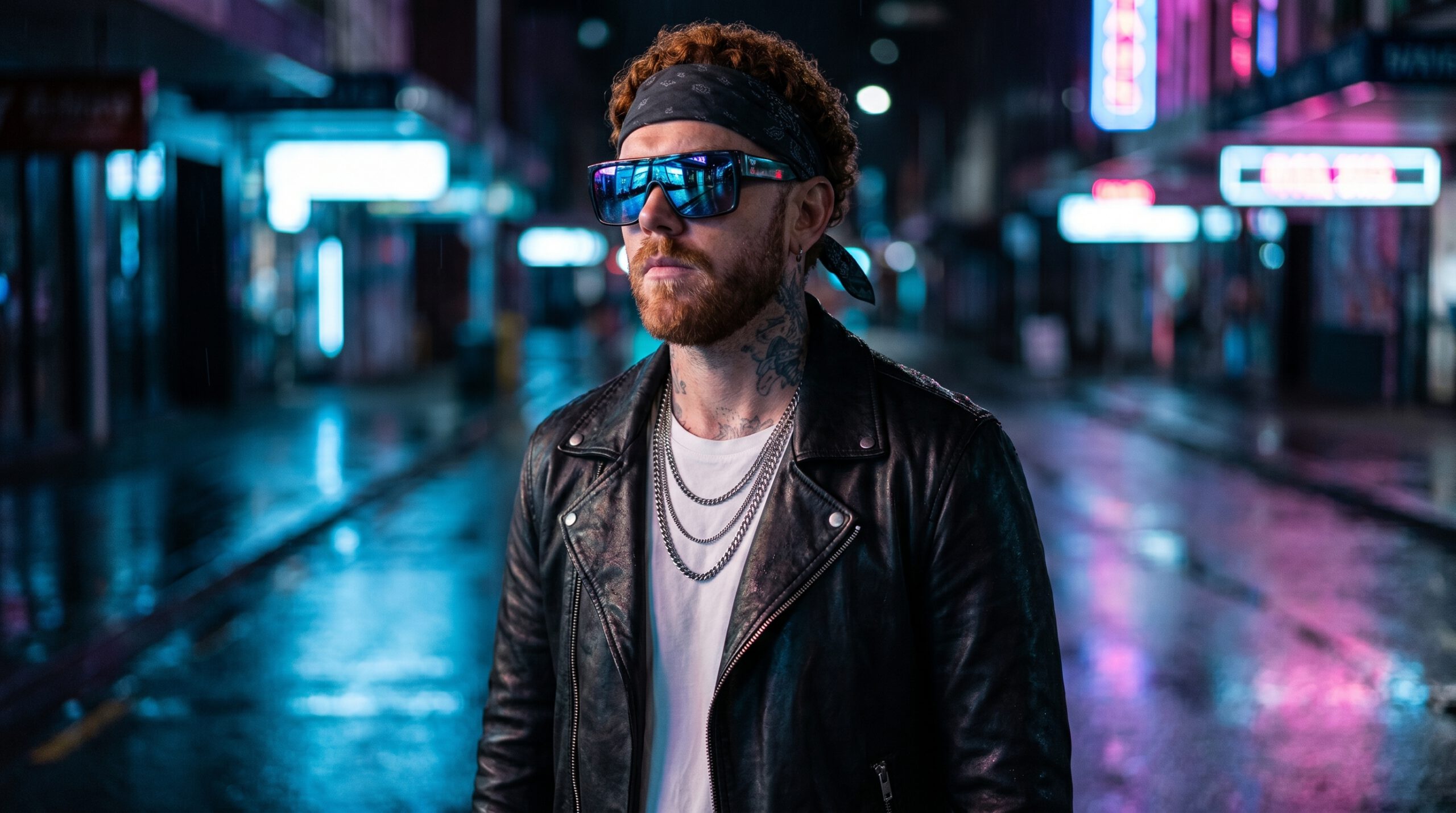
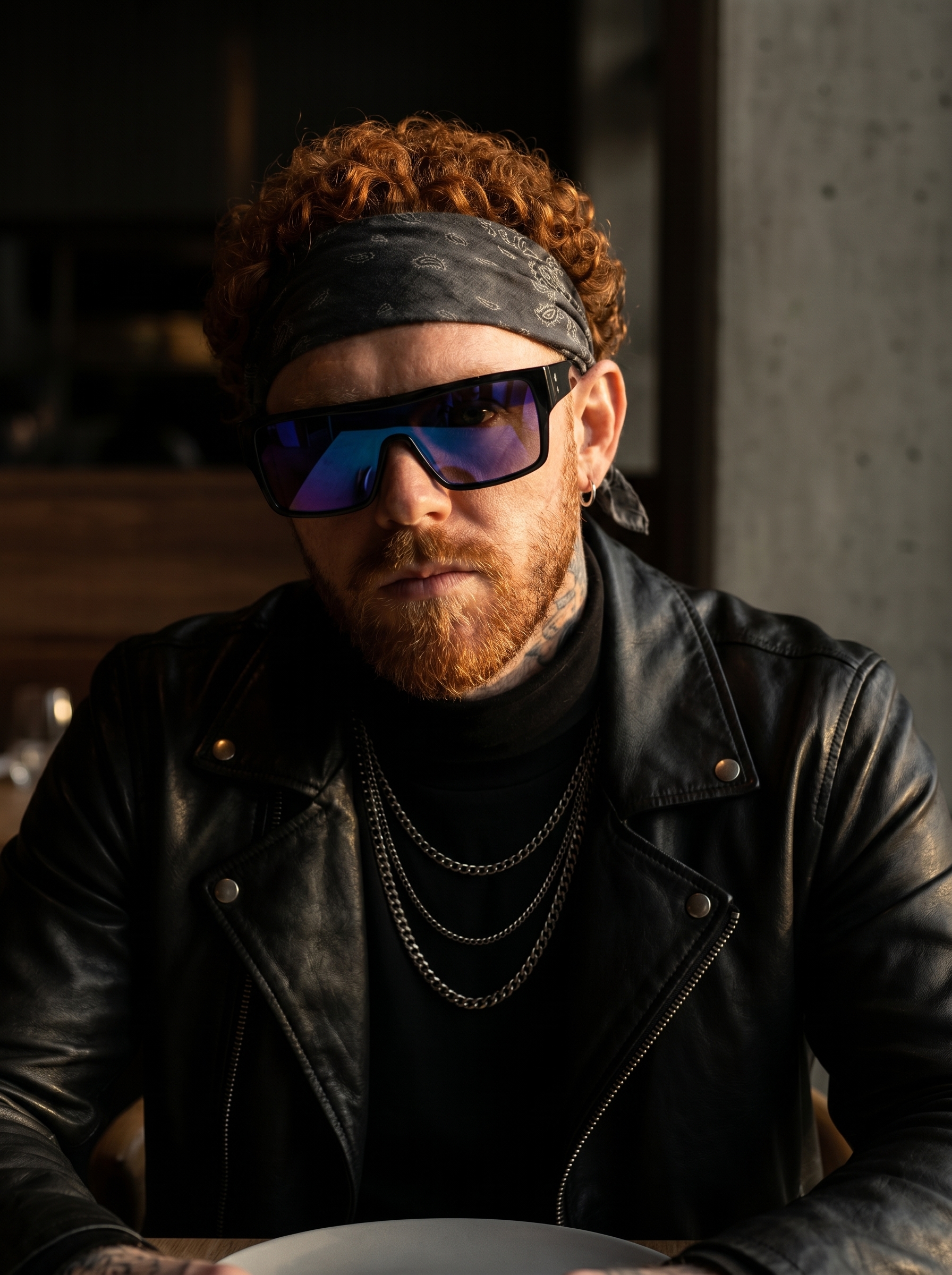
We meet Mason Raye on a Wednesday evening in Hamburg. He's on time, which surprises me. He's wearing his bandana, his glasses - of course - and chains that make a soft sound when he moves. He orders water and immediately asks if he can record. "I forget things otherwise," he says. "Important things."
It lacked a thread. That’s the most honest thing I can say about it. They were good songs – I stand behind every single one. But as an album, it didn’t tell a story. It was more a collection of moments than a place you could return to. And I wanted to build a place.
I grew up with the 80s – not because I was born there, but because my father listened exclusively to music from the 80s. Hall & Oates, Tears for Fears, Prince. Those productions. Those synths. That sound shaped me more than anything that came after. So yes – if I was going to build a place, it was going to be that one.
It sounds bolder than it is, I think. I didn’t think: I’m going to make a Back to the Future album. I thought: what if someone was actually there. In the 80s. What would he miss? What would he hear? And then that question becomes a character – and the character becomes a story.
The character is me, yes. He drives into the past. Lives there. Plays shows. Goes to the arcade on Friday nights. That’s Insert Coin – that track is actually very simple. It’s a Friday evening in 1985. Nothing happens. He’s happy. But there’s something missing, even if he can’t quite name it.
Synara.

She’s an AI voice. I’m saying that directly because I don’t want it to come out like a reveal, like some kind of trick. It’s not a trick. I worked with AI-generated vocals and at some point one of those voices had something – a quality, a texture – that I couldn’t let go of. I gave her a name. Synara.
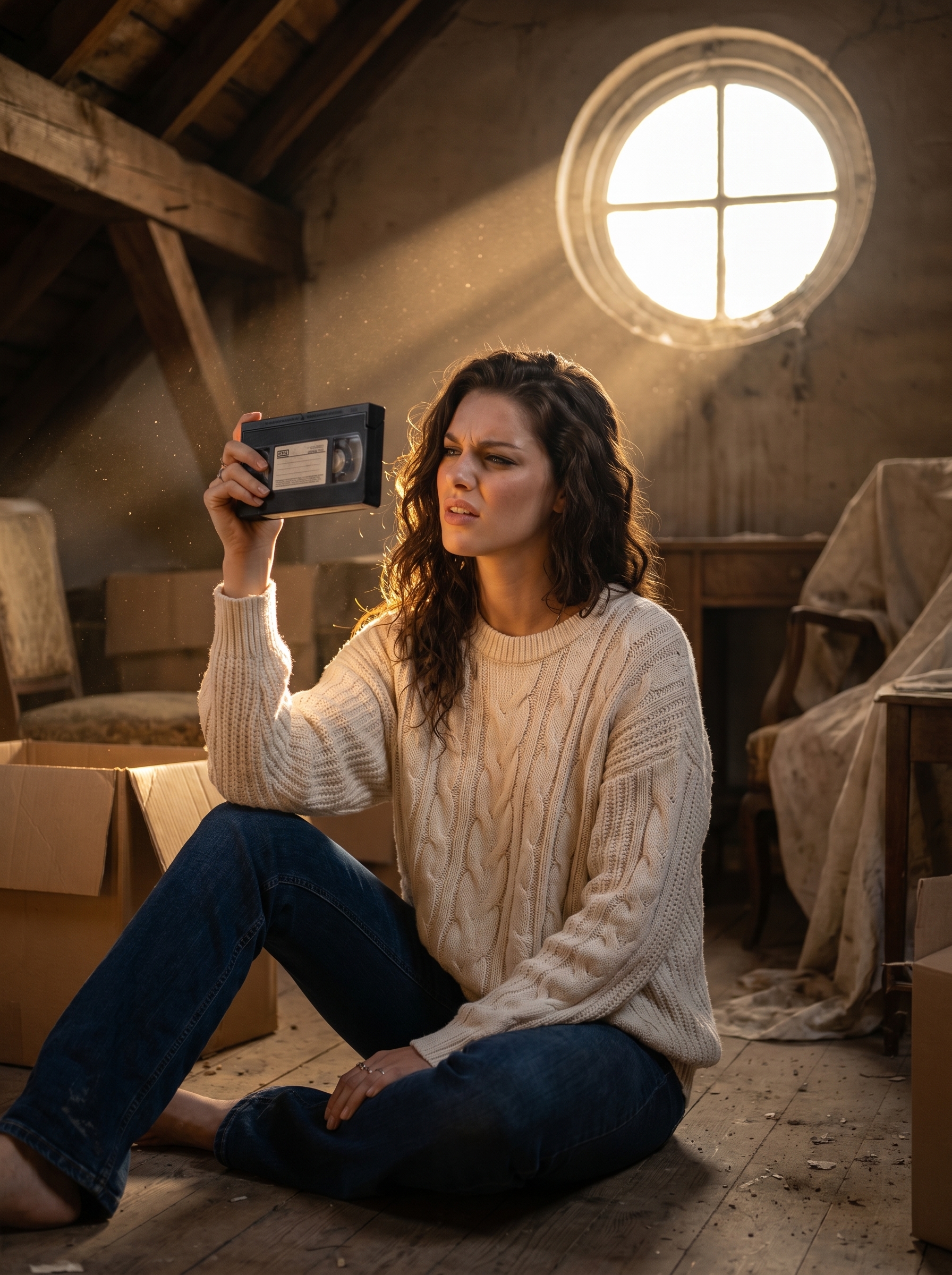
Exactly. In the concept of the album, she – in the present, running parallel to everything he’s experiencing in the 80s – finds cassettes in an attic. Photographs. Of him. From 1982, 1985, 1988. He’s performing. Making music. He looks exactly like the man she knows. And she doesn’t understand how that’s possible. That’s Found on Tape – her moment. Her attic.
It’s the loneliest track on the album. Because she’s alone with this discovery. She can’t tell anyone what she’s found – who would believe her?
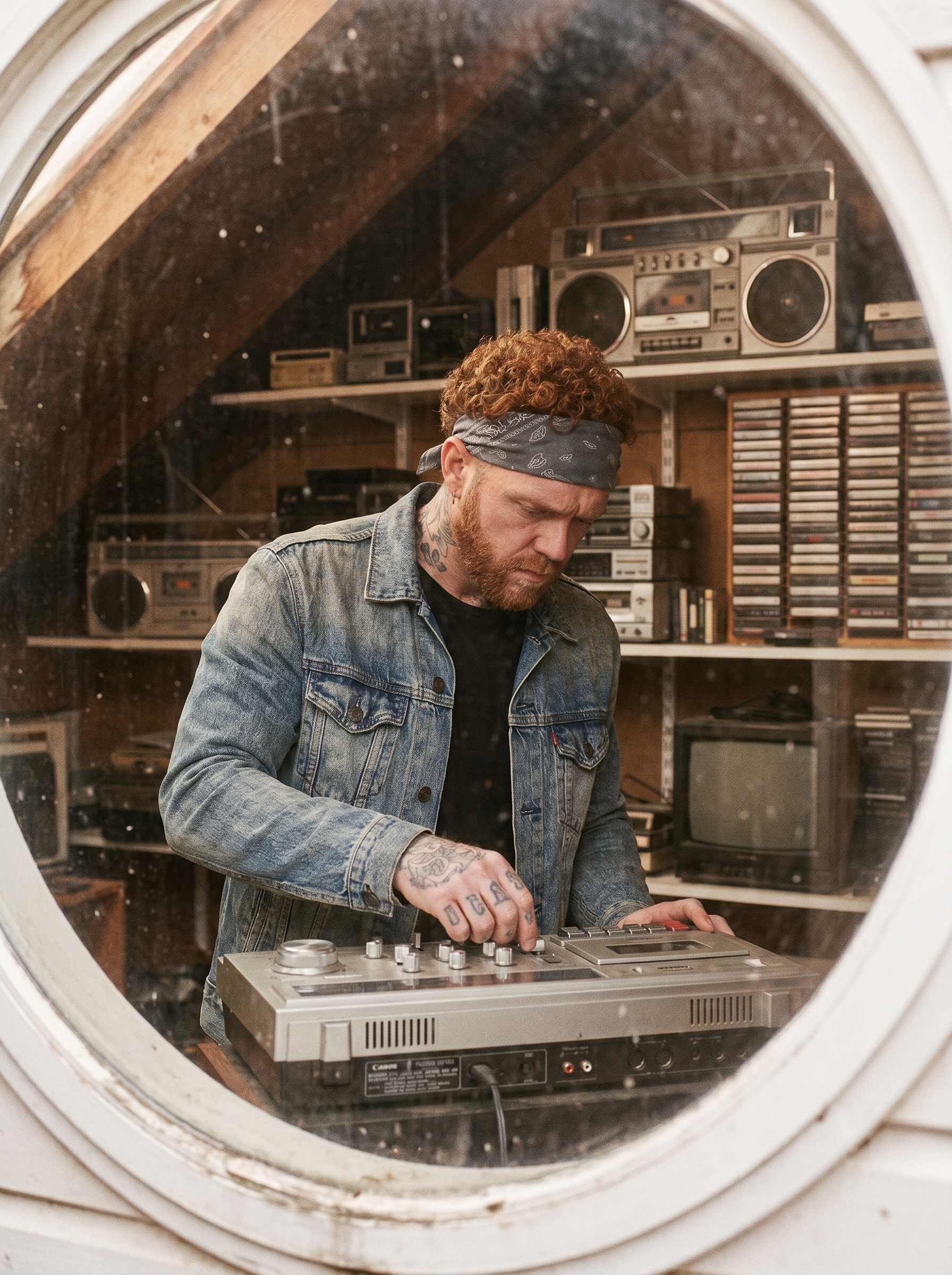
That’s the song where both of them exist at the same time but aren’t together. He’s in the 80s. She’s in the present. But somehow – on a frequency that doesn’t know time – they’re hearing the same thing. Feeling the same thing. Playback Hearts tries to capture that moment: two hearts, same rhythm, wrong era.
[pause] That’s the best description I’ve ever heard. Can I steal that?
Back to the Future always understood „back“ as a direction. Ours is different.
When he realises that Playback Hearts – this song he’s writing – can’t be finished without her. There’s a voice missing. His voice alone isn’t enough. That’s the moment. He comes back, he gets her. Brings her to the past.
[smiles] They make music. What else.

At some point you have to go back. That’s the condition. The DeLorean doesn’t run forever. And the album — Back to Me — is that moment of return. An ode to everything that was. Back to the Future always understood „back“ as a direction – back to the future. Our „back“ is different. Back to me – back to who I am when I’m here, in the present, with her.
Yes, and that’s intentional. I didn’t want a cryptic cover. I wanted someone to see the cover and immediately understand: this is a tribute. This is love. Love for an era, for a film, for a way of thinking about music – and love for someone you meet in the wrong time.
[long pause] The present, probably. The next album happens here. Now. No DeLoreans. Just what remains when you’ve come back.